
Osborne Warns Nations: Adopt AI or Risk Economic Decline
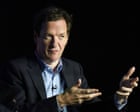
George Osborne, the former UK Chancellor now leading OpenAI's global partnerships, delivered a stark message to world leaders in Delhi: nations that hesitate to adopt advanced artificial intelligence face economic weakening and a diminished future. Speaking at the AI Impact Summit, Osborne framed the global AI landscape as currently dominated by US and Chinese systems, presenting a pressing choice for other countries.
“A lot of countries who aren't the United States or China face two contradictory feelings,” Osborne stated. “The first is a fear of missing out on this technological revolution. The second is a desire to safeguard national sovereignty while relying on AI controlled elsewhere.” He argued that inaction leads to a form of lost sovereignty, resulting in a “weaker nation, a poorer nation, a nation whose workforce will be less willing to stay put.”
The summit, hosted by Indian Prime Minister Narendra Modi, focuses on applying AI to challenges in the Global South, such as agriculture and public health, while improving safety standards. The Trump administration's stance was clear, with senior AI adviser Sriram Krishnan emphasizing a goal of global AI supremacy and criticizing EU regulations as hindrances to innovation.
However, voices from outside the two superpowers pushed back. Mozilla's Mark Surman challenged the notion that only the US and China can build significant AI. Kevin Degila of Benin's digital agency explained they are building public AI tools by fusing external technologies with their own language datasets, noting, “Anthropic and OpenAI don’t reach the farmers.” Rwanda's ICT minister, Paula Ingabire, spoke of avoiding locked-in dependencies.
Former UK Prime Minister Rishi Sunak, now an adviser to Anthropic and Microsoft, urged leaders to treat AI as an immediate priority. “Some political leaders think that AI is going to be tomorrow’s issue,” Sunak said. “They need to recognise that it’s an ‘action this day’ issue.”
Original source
Read on The Guardian